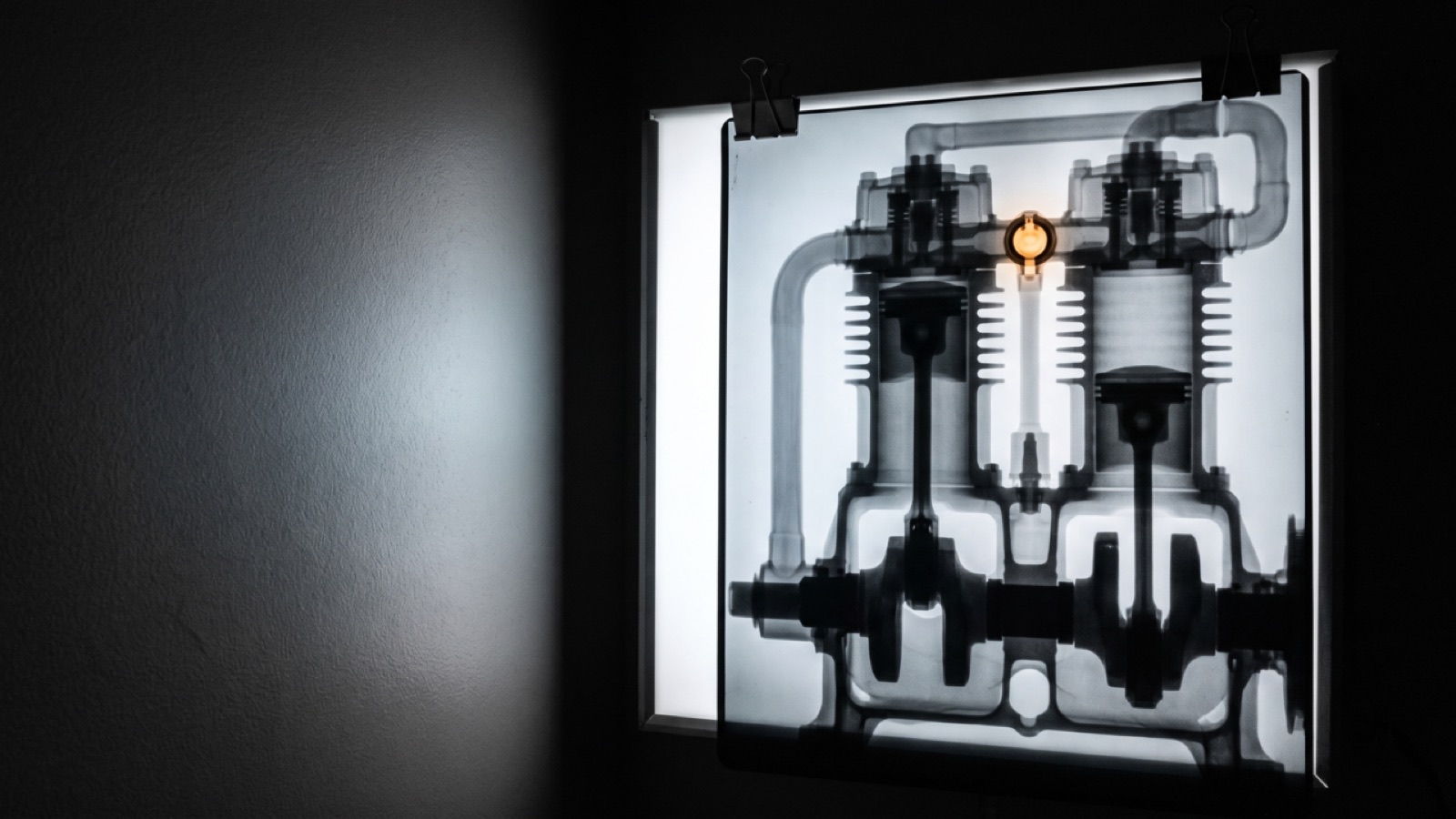
The detailNo agent writes to a machine. The work order waits in an approval card until a person signs it.
Practice: Agents propose. A person signsThe problem
A plant has alarms, but not attention. Hundreds of signals from machines on different protocols land in the same places, several systems poll the same controllers for the same data, and the night shift cannot tell which alarm matters. Adding one clever AI on top does not fix that.
What we built
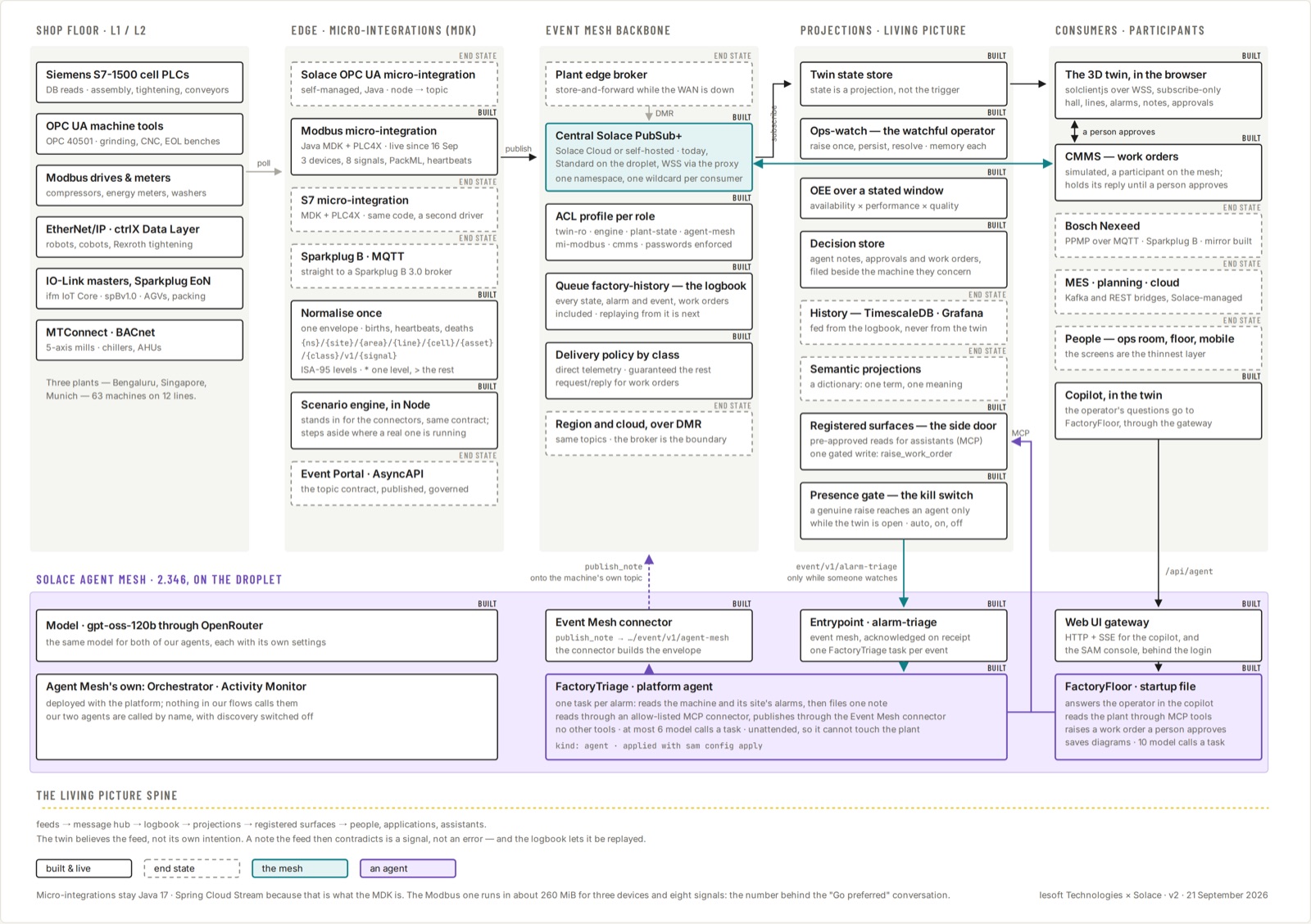
A multi-site factory twin driven by an event mesh. Edge connectors publish every machine’s state once, onto topics. The twin, the dashboards and the agents all subscribe to what they need. When something goes wrong, a triage agent reads the situation, refers it to the right specialist agent, and proposes a work order. A person signs it before anything happens, and no agent ever writes to a machine.
Every system polls every machine
189 connections to keep alive: 63 × 3
Each machine publishes once, on an event mesh
66 connections: 63 + 3, and one path for the alarm
How it works
Each machine publishes to a topic shaped like its place in the plant: which site, which line, which machine, what kind of message. A consumer subscribes to the shape it needs, every press on every line, or everything in one plant, without a new integration. The agents run on Solace Agent Mesh and read the plant through read-only tools. The work order waits in an approval card until a person signs it.
Where it goes next
Real edge connectors on a pilot line, the client’s own maintenance system behind the approval card, and handover notes written for each shift. Why a plant needs triage rather than one clever AI is the subject of What Hospitals Know About Alarms That Factories Don’t.